TorZon Market — Security Features & Verified Links

TorZon Market has operated on the Tor network since September 2022, growing into one of the largest English-language v3 hidden services after several older markets shut down in 2024 and 2025. Account protection and payments on TorZon revolve around mandatory OpenPGP encryption, challenge-response two-factor login, standard and 2-of-3 multisig escrow, and Bitcoin or Monero support — covered below alongside PGP-signed onion addresses and practical OPSEC steps.

Reference updated

20K+ Active Listings
2022 Launched
BTC / XMR Supported Coins

Marketplace Overview

How TorZon's v3 onion setup, PGP login challenges, and escrow options work in practice

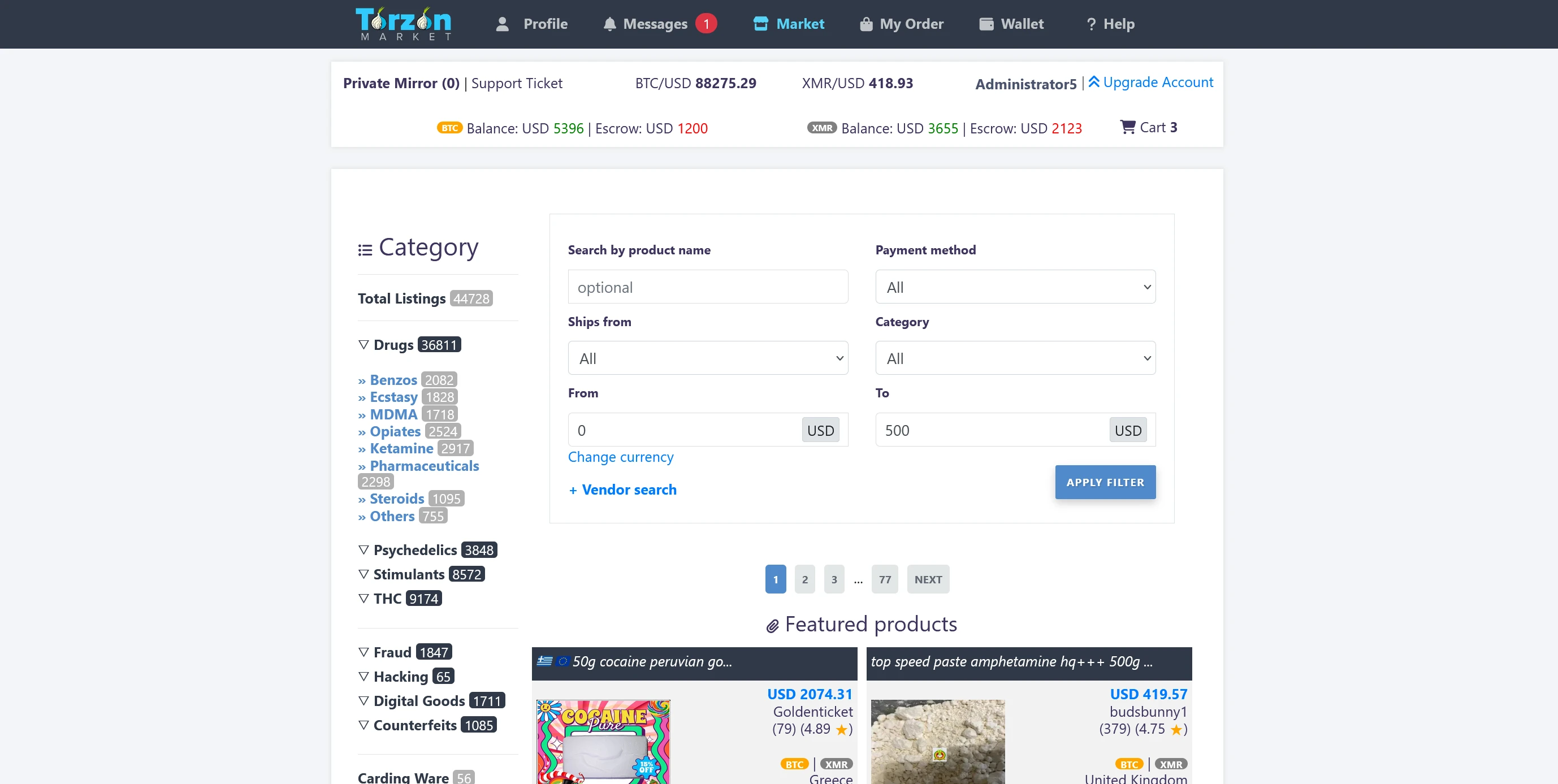
Interface layout of the TorZon hidden service showing navigation and account panels

How the Market Is Built

TorZon Market launched in September 2022 as a Tor-only v3 hidden service. Over the next three years, as major competitors either got seized or walked away with user funds, thousands of established sellers moved their storefronts over — pushing TorZon's catalog past 20,000 listings by 2025–2026.

Instead of relying on browser JavaScript or email-based recovery, accounts on the market use OpenPGP keys for two-factor login challenges and encrypted buyer-seller messages. Orders run through either standard market-held escrow or 2-of-3 multisignature escrow, with payments accepted in both Bitcoin (BTC) and Monero (XMR). Most experienced users stick to Monero because Bitcoin leaves a permanent public trail on the blockchain.

Because Tor v3 addresses are 56-character cryptographic strings rather than human-readable domain names, phishing clones are the single biggest threat facing users. Checking the market's PGP signature before opening any mirror link is the only reliable way to avoid logging in to a credential-stealing proxy.

At a Glance

  • Launch: September 2022
  • Catalog Size: 20,000+ listings
  • Coins: Monero (XMR), Bitcoin (BTC)
  • Escrow: Standard & 2-of-3 Multisig
  • Login Security: PGP 2FA challenge
  • Network: Tor v3 .onion only

Key Marketplace Features

How vendor reputation, escrow, payments, and account authentication are handled on TorZon

Cross-Market PGP Reputation Import

When older markets shut down, scammers immediately try to register famous seller usernames on surviving sites. TorZon lets displaced vendors carry over their historical feedback score only if they sign a verification challenge using the exact same OpenPGP key they used on markets like AlphaBay, Archetyp, or Abacus. Read our market history and comparison for how those migrations played out.

Standard Escrow & 2-of-3 Multisig

Regular orders sit in market-held escrow until the buyer confirms delivery or a moderator resolves a dispute. For higher-value orders, TorZon supports 2-of-3 multisignature escrow where the buyer, seller, and market each hold one key and any two signatures release the coins — so funds are not locked behind a single hot wallet. See the escrow and payment FAQ for details.

Monero (XMR) & Bitcoin Support

TorZon accepts both Bitcoin and Monero, generating a fresh deposit address for each transaction. While Bitcoin remains an option, its public ledger makes every deposit traceable to KYC exchanges unless carefully isolated. Monero hides the sender, receiver, and transaction amount on-chain by default using ring signatures, stealth addresses, and RingCT.

PGP 2FA Login & Encrypted Notes

Once you attach a public OpenPGP key to your profile and turn on two-factor authentication, logging in requires decrypting a fresh PGP challenge block in your local client (GnuPG or Kleopatra) to retrieve a one-time session token. Buyer order notes and private messages use the seller's public PGP key so sensitive delivery details aren't left in plaintext.

Open Registration & Dispute Handling

Creating a buyer account on TorZon is free and does not require an invitation code. If an order goes wrong, either side can open a formal dispute inside the escrow timer window, freezing the funds while a moderator checks the PGP-signed message history and tracking evidence before splitting or refunding the escrow balance.

Built for Tor Browser's Safest Mode

Most historical browser exploits on the Tor network relied on JavaScript vulnerabilities in older Firefox builds. TorZon's interface — including search filters, CAPTCHAs, order forms, and PGP challenge screens — is built with server-rendered HTML and CSS so it works cleanly with Tor Browser set to "Safest" and JavaScript completely disabled.

Security Architecture & End-to-End Encryption

How order escrow timers, 2-of-3 multisig co-signing, and PGP login challenges work inside TorZon

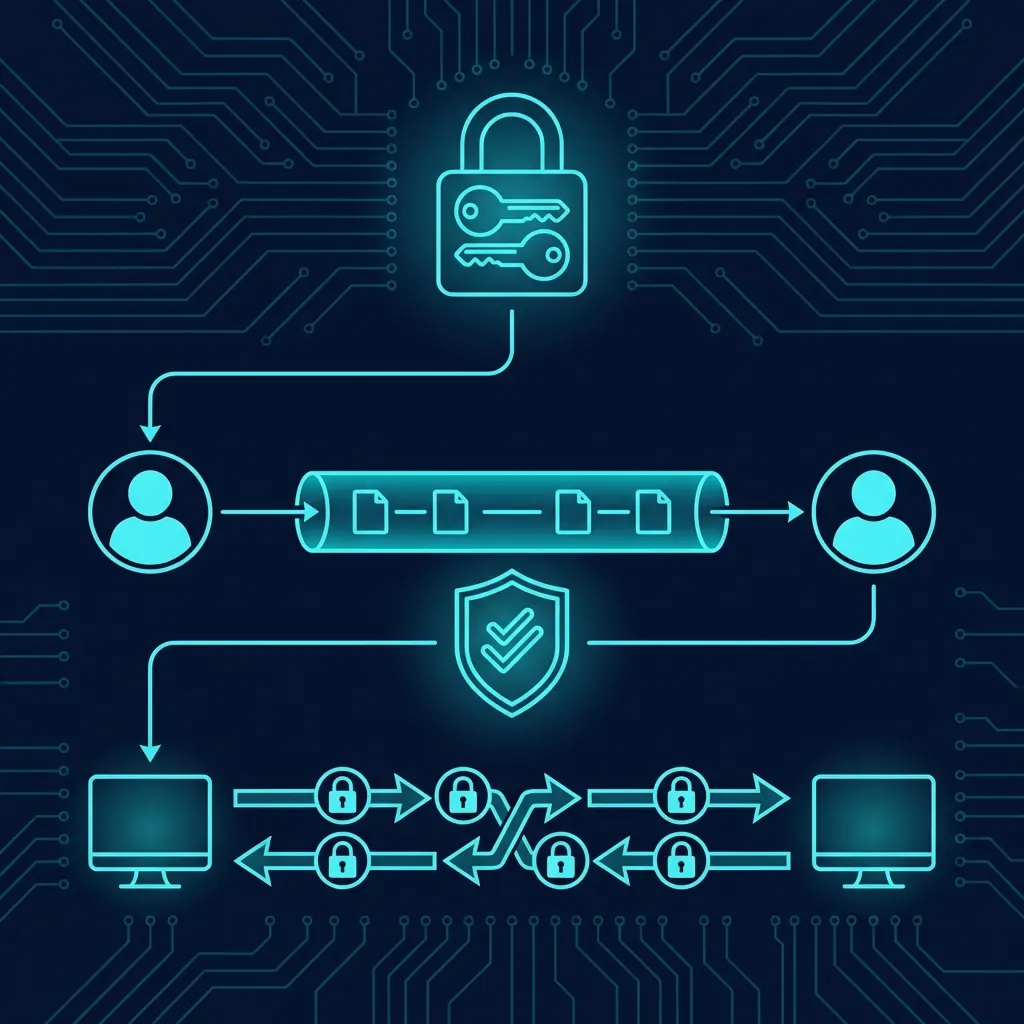
Diagram of PGP public-key encryption and two-factor login verification

Order Lifecycle, Escrow Timers & 2-of-3 Multisig

When a buyer places an order on TorZon Market, the payment does not go straight to the vendor. In standard escrow, the market locks the BTC or XMR balance under a countdown timer once the seller marks the order shipped. During that window, the buyer can either finalize the order after checking delivery, request a timer extension if transit is delayed, or open a dispute that freezes the auto-finalization clock until a moderator reviews the encrypted chat log.

For larger transactions, 2-of-3 multisignature escrow removes single-wallet custodial risk. Instead of the market holding the funds alone, the transaction sits in an address controlled by three separate keys: buyer, vendor, and market. On a smooth order, the buyer and vendor sign together to release payment; if a dispute happens, the moderator co-signs with whichever side wins the ruling.

Login Challenges, Anti-Phishing Phrases & Mirror Pool

Account defense on TorZon Market combines two layers at login. First, the account displays a personal anti-phishing phrase chosen during signup so the user can see immediately that they are communicating with the real database. Second, with PGP 2FA enabled, the server issues an OpenPGP ciphertext challenge encrypted to the user's public key that can only be unlocked locally.

Because active escrow timers require reliable access even when competitors flood the network with DDoS traffic, TorZon pairs its primary v3 address with a pool of signed secondary mirrors. Every legitimate mirror connects to the same account and order state, and every rotation is signed with the market's PGP key.

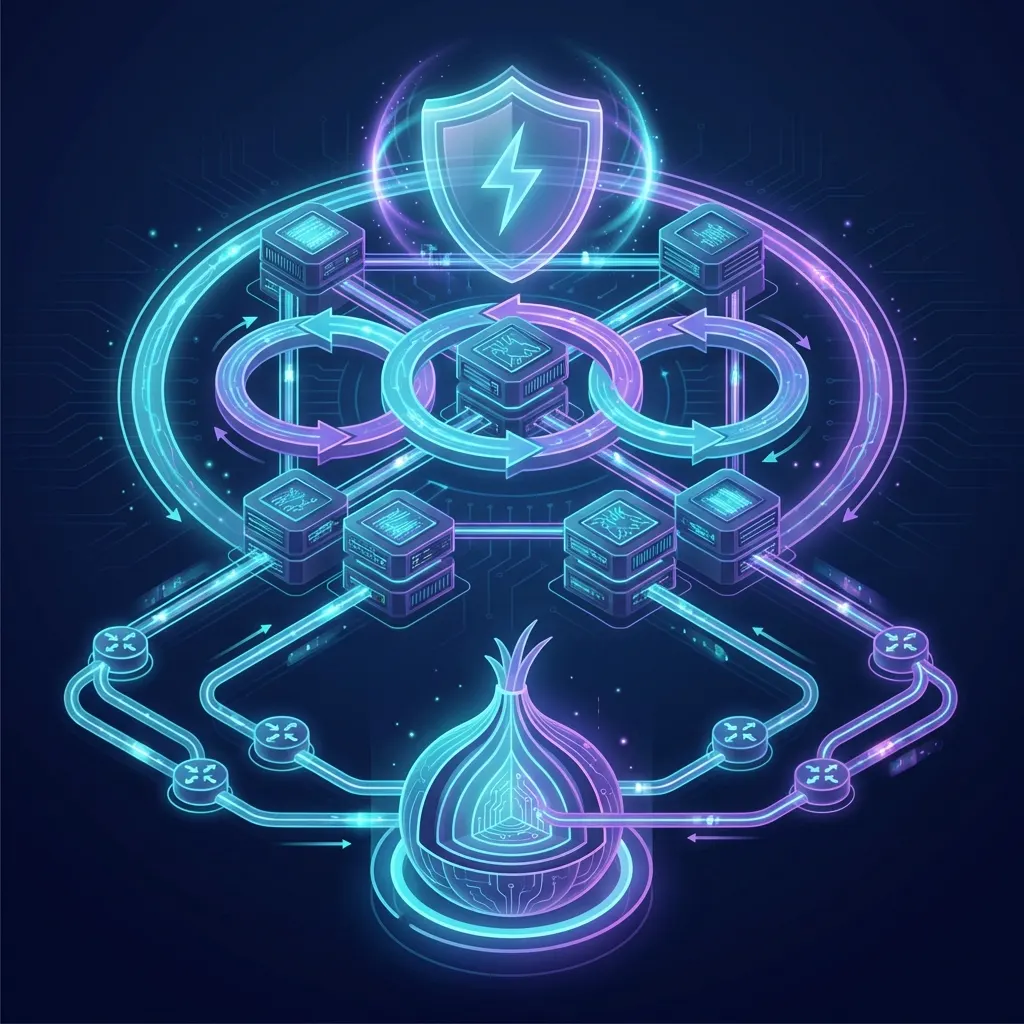
Diagram showing how multiple v3 onion mirrors route traffic to the core hidden service

Further Research & Safety Documentation

In-depth guides on TorZon's history, local OPSEC, and the underlying cryptography — PGP, Tor internals, Monero privacy, and multisig escrow

How TorZon Outlasted Its 2022–2025 Competitors

Between 2022 and 2026, law enforcement seizures and sudden exit scams wiped out Hydra, Incognito, Archetyp, and Abacus. Our history page breaks down how those closures drove over 20,000 listings onto TorZon, how PGP key feedback import solved the seller trust problem, and how TorZon compares side-by-side with former markets.

TorZon Market History & Comparison →

Step-by-Step OPSEC & PGP Verification Guide

Having the right onion link is only half the job. Our safety guide walks through verifying the Tor Browser installer signature, switching Tor Browser to Safest mode, checking OpenPGP signatures in GnuPG and Kleopatra, and fixing 0xF0 / 0xF2 circuit errors when a mirror stalls.

Read the Tor & PGP Safety Guide →

The Full OpenPGP Verification Workflow

Ed25519 vs RSA-4096 key generation, revocation certificates, and why a one-to-two-year expiry is protection rather than loss. Then the verification workflow itself — importing a market's public key, checking all 40 fingerprint characters, and reading Good signature output without falling for spoofed status lines.

PGP Signature Verification Guide →

What a v3 Onion Address Actually Is

The 56-character hostname is a base32-encoded Ed25519 public key with a built-in checksum — no registrar, no certificate authority. How introduction points and rendezvous circuits work, and why vanity clones can only fake the first few characters.

Tor v3 Onion Address Anatomy →

Bridges, Transports & Tor Error Codes

For networks that block Tor's public guard relays: how obfs4, Snowflake, and meek disguise the handshake, plus the four official BridgeDB channels where fresh bridge lines come from. A working-fix table covers every onionsite error code from 0xF0 through 0xF7.

Tor Bridges & 0xF0 Diagnostics →

Monero vs. Bitcoin Privacy Compared

The verdict table comes first: how UTXO clustering and KYC anchors name Bitcoin addresses permanently, how ring signatures, stealth outputs, and RingCT keep XMR off the graph, and why the wallet's network layer still leaks on both.

XMR vs BTC Privacy Comparison →

How 2-of-3 Multisig Escrow Protects a Trade

Three keys — buyer, seller, arbiter — where any two signatures release the coins. The arbiter only acts in a dispute, custodial balances stop being a single point of failure, and the honest limits of the construction.

2-of-3 Multisig Escrow Mechanics →

About This Reference Site

TorzonLink is an independent security and cryptography reference. We do not run, represent, or have any affiliation with TorZon Market. All address strings and technical notes on this site are compiled from publicly signed announcements and open community archives to help readers avoid phishing clones.

Spot an outdated note or a broken reference? Email our editorial inbox at torzonlink-contact@gmail.com.

Address Reference Onion Addresses & PGP Key →
Safety Documentation Tor & PGP Safety Guide →

Three Order Mistakes to Avoid

1. Agreeing to Finalize Early (FE): Releasing escrow before an order arrives waives buyer protection completely — if a seller disappears after FE, moderators cannot recover the funds.

2. Letting the escrow timer run out: Every shipped order has an auto-finalize countdown. If a package is late, request an extension or open a dispute before the timer hits zero.

3. Keeping an idle balance on the market: Only deposit what you need for a specific order and withdraw leftover change to your own local wallet right away.

Read Full Security FAQ